Eindexamen Engels vwo 2026, tijdvak 2: vragen en antwoorden
Alle vragen met het antwoord uit het correctievoorschrift. Opgaven: Tekst 1 Excusez le mot, Tekst 2 The end of Britain’s festival boom, Tekst 3 Honours system has lost its shine, Tekst 4 ChatGPT, DALL-E 2 and the creative process, Tekst 5 Review: Empireworld by Sathnam Sanghera, Tekst 6 All Things Are Too Small, Tekst 7 Philip Roth, Tekst 8 Unruly, Tekst 9 How the right reads ‘woke’, Tekst 10 The plot thickens…, Tekst 11 How a megayacht landed in U.S. custody.
Het centraal examen Engels vwo 2026, tijdvak 2 telt 42 vragen. Alle vragen vallen onder reading comprehension. De opgaven en het correctievoorschrift staan op examenblad.nl. Met ToetsChecker maakt een klas het examen op papier en doet het AI-model per vraag een nakijkvoorstel met feedback, dat de docent controleert en vrijgeeft.
Onderwerpen in dit examen
Alle 42 vragen van dit examen vallen onder reading comprehension. Bij dit vak toetst het centraal examen één vaardigheid; de verschillen zitten in de teksten en de vraagsoorten.
Opgaven en correctievoorschrift
De documenten staan op examenblad.nl, de officiële site van het College voor Toetsen en Examens. ToetsChecker haalt ze daar op als je het examen in de vragenbank kiest.
Oefenen als leerling
Een oud examen maken is de beste voorbereiding, maar zonder nakijken weet je niet waar je punten verliest. Met ToetsChecker maak je het examen Engels vwo 2026, tijdvak 2 op papier, net als het echte examen, of online als je docent het digitaal klaarzet. Het AI-model kijkt het na volgens het officiële correctievoorschrift. Zodra je docent het resultaat vrijgeeft, zie je per vraag wat goed was en wat er ontbrak.
Nakijken als docent
Start gratis vanaf deze pagina
Maak een gratis account vanaf deze pagina, dan staat het examen Engels vwo 2026, tijdvak 2 meteen voor je klaar als correctiemodel, met alle vragen en het correctievoorschrift. Dat kost geen credits.
Laat de klas het examen maken
Op papier, zoals het echte examen: je scant de stapel in één keer of mailt de scan naar je scanadres. Of online, als digitale toetsafname met toezicht; de opgavetekst staat dan als bron bij elke vraag. Afbeeldingen uit het examen gaan niet mee, die staan in de PDF van de opgaven.
Geef de resultaten vrij
Het AI-model kijkt elk examen na volgens het correctievoorschrift en schrijft feedback per vraag. Bij een oefenexamen geef je alles in één keer vrij; bij een toets die meetelt loop je het voorstel eerst na. De leerling ziet het resultaat pas na jouw vrijgave.
ToetsChecker is geen examensite: je kijkt er ook je eigen SO's, proefwerken, praktische opdrachten en verslagen mee na, handgeschreven of digitaal, met jouw correctiemodel en feedback per vraag. Een gratis account heeft alle functies en 200 credits per maand, genoeg om ongeveer 100 toetsen te laten nakijken. Maak een gratis account of lees eerst hoe het nakijken werkt.
Vragen en antwoorden
Hieronder staan de opgaven en vragen van het examen Engels vwo 2026, tijdvak 2. Onder elke vraag klap je het antwoord uit het correctievoorschrift open. Probeer de vraag eerst zelf.
Tekst 1 Excusez le mot
1 Guillaume Rey, who worked at a Vancouver restaurant on Canada‘s Pacific coast, filed a complaint with British Columbia’s Human Rights Tribunal against his former employer, claiming “discrimination against my culture”.
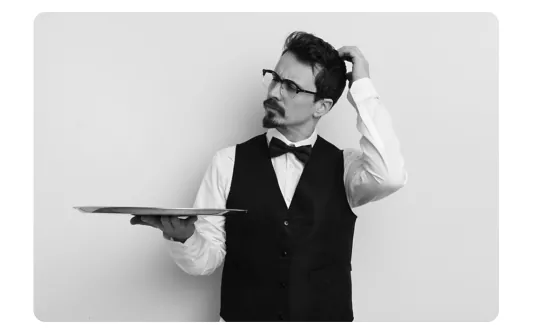
2 The restaurant, operated by Cara Operations, accused Rey of violating its code of conduct and said he persisted in his behaviour towards colleagues despite verbal and written performance reviews. In alleging discrimination Rey said French culture just “tends to be more direct and expressive”. He owes his sacking to his “direct, honest and professional personality”, which he acquired while training in France’s hospitality industry. Both parties agree Rey performed well at his job despite his allegedly disagreeable demeanour.
3 The restaurant and its parent company had attempted to dismiss the complaint but tribunal member Devyn Cousineau denied that application, clearing the path for a yet unscheduled hearing. She said the application’s denial should not be seen as an indication of the case’s outcome. “Mr Rey will have to explain what it is about his French heritage that would result in behaviour that people misinterpret as a violation of workplace standards of acceptable conduct,” she wrote in her decision.
theguardian.com, 2018
Let op: beantwoord een open vraag altijd in het Nederlands, behalve als het anders is aangegeven. Als je in het Engels antwoordt, levert dat 0 punten op.
Vraag 1 1 punt
Why did Guillaume Rey lodge a complaint against his employer? He believes his employer
Bekijk het antwoord
Antwoord: B
B
Vraag 2 1 punt
What becomes clear about Guillaume Rey’s case in paragraph 3?
Bekijk het antwoord
Antwoord: C
C
Tekst 2 The end of Britain’s festival boom

At the end of July, the well-established Secret Garden Party festival in Cambridgeshire “symbolically burned down its main stage”, says Alex Lawson in The Observer. It was a potent sign of what a difficult year it has been for the festival sector, which Freddie Fellowes, who launched that festival in 2002, claims is “being strangled by corporate greed”. Certainly, indie festivals have been suffering. While the giants are still pulling in crowds, 60 smaller ones have been postponed or cancelled this year, with organisers blaming everything from the cost-of-living crisis and the wet weather, to an unruly supply chain that makes staging anything a huge risk. Meanwhile, “long-running tensions over corporate sponsorship” have exploded, culminating in Barclays suspending its sponsorship of all Live Nation festivals (including Download and Latitude) in response to boycotts. It’s possible, though, that after a massive proliferation of small festivals, this is just “natural selection” thinning out a crowded market. ___ (4) Tickets for the Green Man in South Wales sold out in two hours.
The Week, 31 augustus 2024
‘what a difficult year it has been for the festival sector’ (second sentence)
Vraag 3 1 punt
Which of the following is not mentioned as a factor for this in this text?
Bekijk het antwoord
Antwoord: C
C
Vraag 4 1 punt
Which of the following fits the gap in the text?
Bekijk het antwoord
Antwoord: C
C
Tekst 3 Honours system has lost its shine
I read that John Griffin, the founder of the Addison Lee taxi firm, is to be awarded a knighthood “for services to industry and charity” (‘Cronyism claims as at least seven Tory donors included in honours list’, 29 December). Griffin felt he deserved “some recognition” as, during his stewardship of the firm “no driver was found guilty of any serious offence”.
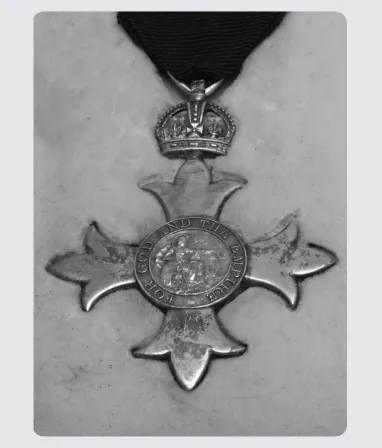
If this is now recognised as a qualification for awards, I also feel that I deserve some recognition as, in about 25 years of owning chainsaws, I have never been involved in either a massacre nor the felling of a significant sycamore. To whom should I apply?
Nick Broadhead
Liverpool
Justin Welby is rewarded with a knighthood for his work on the coronation of King Charles III. Conducting coronations is in the job description of archbishops of Canterbury. It is a task they are likely to be required to undertake once, in careers lasting many years.
Dressing, feeding and toileting residents with dementia and double incontinence are in the job descriptions of the care staff in residential homes. Those are tasks they are required to undertake every day. They are rewarded with low pay and, now, restrictions on their ability to bring family members to this country to join them while they continue serving some of our most deprived fellow citizens. O tempora! O mores!
John Weeks
Weston Lullingfields, Shropshire
The Guardian, 2 januari 2024
Vraag 5 1 punt
Which of the following is in line with the point made in both letters?
Bekijk het antwoord
Antwoord: C
C
Vraag 6 1 punt
How does Nick Broadhead present his argument?
Bekijk het antwoord
Antwoord: C
C
Vraag 7 1 punt
What is the main reason for John Weeks to be critical of the honours system?
Bekijk het antwoord
Antwoord: A
A
Tekst 4 ChatGPT, DALL-E 2 and the creative process
by Nir Eisikovits, professor of Philosophy and Director, Applied Ethics Center, UMass Boston and Alec Stubbs, Fellow in Philosophy, UMass Boston
1 In 2022, OpenAI – one of the world’s leading artificial intelligence research laboratories – released the text generator ChatGPT and the image generator DALL-E 2. While both programs represent monumental leaps in natural language processing and image generation, they’ve also been met with apprehension. Some critics have even proclaimed the death of art. But to what extent does this technology really interfere with creativity?
2 After all, for the technology to generate an image or essay, a human still has to describe the task to be completed. After a result is generated, some further human tweaking and feedback may be needed – touching up the art, editing the text or asking the technology to create a new draft in response to revised specifications. Even the DALL-E 2 art piece that recently won first prize in the Colorado State Fair’s digital arts competition required a great deal of human “help” – approximately 80 hours’ worth of tweaking and refining the descriptive task needed to produce the desired result.
3 It could be argued that by being freed from the tedious execution of our ideas – by focusing on just having ideas and describing them well to a machine – people can let the technology do the dirty work and can spend more time inventing. But in our work as philosophers we have come to believe that AI art devalues the act of artistic creation for both the artist and the public. In our view, the desire to ___ (10) ideation and execution is a chimera. It is the work of making something real and working through its details that carries value, not simply that moment of imagining it. Artistic works are lauded not merely for the finished product, but for the struggle, the playful interaction and the skillful engagement with the artistic task, all of which carry the artist from the moment of inception to the end result.
4 But what about the perspective of those experiencing the art? Does it really matter how the art is produced if the finished product ___ (11-1) delight? We think that it does matter, particularly because the process of creation adds to the value of art for the people experiencing it as much as it does for the artists themselves. Part of what gives art its power is the process of witnessing natural gifts playing out. People enjoy and celebrate this talent because, in a fundamental way, it ___ (11-2) the paragon of human achievement – the amalgam of talent and work, human gifts and human sweat.
5 Might ChatGPT and DALL-E be worth keeping around? Perhaps. These technologies could serve as catalysts for creativity. It’s possible that the link between ideation and execution can be sustained if these AI applications are simply viewed as mechanisms for creative imagining. They can generate stimuli that allow artists to engage in more imaginative thinking about their own process of conceiving an art piece. ___ (13), if ChatGPT and DALL-E are the end results of the artistic process, something meaningful will be lost. But if they are merely tools for fomenting creative thinking, this might be less of a concern.
6 Still, even if AI systems are used only as catalysts for creative imagining, we believe that people should be skeptical of what these systems are drawing from. It’s important to pay close attention to the incentives that underpin and reward artistic creation, particularly online. Consider the generation of AI art. These works draw on images and video that already exist online. But the AI is not sophisticated enough – nor is it incentivized – to consider whether works evoke a sense of wonder, sadness, anxiety and so on. They are not capable of factoring in aesthetic considerations of novelty and cross-cultural influence. Rather, training ChatGPT and DALL-E on preexisting measurements of artistic success online will tend to replicate the dominant incentives of the internet’s largest platforms: grabbing and retaining attention for the sake of data collection and user engagement. The catalyst for creative imagining therefore can easily become subject to an addictiveness and attention-seeking imperative rather than more transcendent artistic values.
7 It’s possible that artificial intelligence is at a precipice, one that evokes a sense of “moral vertigo” – the uneasy dizziness people feel when scientific and technological developments outpace moral understanding. Such vertigo can lead to apathy and detachment from creative expression. If human labor is removed from the process, what value does creative expression hold? Or perhaps, having opened Pandora’s box, this is an indispensable opportunity for humanity to reassert the value of art – and to push back against a technology that may prevent many real human artists from thriving.
theconversation.com, 2023
‘But to what extent does this technology really interfere with creativity?’ (alinea 1)
Vraag 8 1 punt
In welke alinea wordt voor het eerst ingegaan op deze vraag? Noteer het nummer van deze alinea.
Bekijk het antwoord
(alinea) 3
Vraag 9 1 punt
Vat kort samen welk punt er wordt gemaakt over AI in alinea 2. Geef antwoord in het Nederlands.
Bekijk het antwoord
Een antwoord met de volgende strekking: AI/Het kan geen kunst/creatieve producten creëren zonder menselijke inbreng/input. / AI is zelf niet intrinsiek creatief.
Vraag 10 1 punt
Which of the following fits the gap in paragraph 3?
Bekijk het antwoord
Antwoord: B
B
Vraag 11 2 punten
Geef aan voor 11-1 en 11-2 in alinea 4 welk woord daar is weggelaten. Noteer de letter van het woord achter elk nummer op het antwoordblad. Let op: er blijven drie woorden over.
- a defies
- b elicits
- c postpones
- d represents
- e transcends
Bekijk het antwoord
- 11-1 b (elicits)
- 11-2 d (represents)
Vraag 12 1 punt
What is the function of paragraph 5?
Bekijk het antwoord
Antwoord: A
A
Vraag 13 1 punt
Which of the following fits the gap in paragraph 5?
Bekijk het antwoord
Antwoord: B
B
Vraag 14 2 punten
Worden de volgende redenen als een bezwaar tegen door AI gegenereerde kunst genoemd in alinea 6? Noteer ‘wel’ of ‘niet’ achter elk nummer op het antwoordblad.
- 1 its amplification of prevailing preferences
- 2 its aptitude for creating works of perfection
- 3 its commercialisation of creative works
- 4 its inability to grasp emotional context
Bekijk het antwoord
- 1 wel
- 2 niet
- 3 niet
- 4 wel
Vraag 15 1 punt
How can paragraph 7 be characterised best?
Bekijk het antwoord
Antwoord: B
B
De volgende alinea is uit de tekst weggelaten:
‘In fact, the process of execution is a gift, allowing artists to become fully immersed in a task and a practice. It allows them to enter what some psychologists call the “flow” state, where they are wholly attuned to something that they are doing. For the artist, the process of artistic creation is an integral part, maybe even the greatest part, of their vocation. But there is no flow state without engaging in skill and practice. And the point of ChatGPT and DALL-E is to make this stage superfluous.’
Vraag 16 1 punt
Op welke plek hoort deze alinea te staan?
Bekijk het antwoord
Antwoord: C
C
Tekst 5 Review: Empireworld by Sathnam Sanghera
Nandini Das
1 In the early 1730s, a new subscription craze transformed Georgian Britain. Every year, for five guineas, “Bartram’s box” would delight plant collectors and gardeners with seeds from among a hundred different North American species. The supply chain had a Pennsylvanian Quaker, John Bartram, at one end and another Quaker, English merchant Peter Collinson, at the other.
2 The overpriced phlox and rudbeckia we now buy from garden centres in seasonal attempts to brighten up our outdoor spaces, the rhododendrons and magnolias that arrest our attention across the drabbest of streets, were all introduced to England thanks to their initiative. Collinson and Bartram’s subscriber list included dukes and earls who vied with each other to beautify their estates, but the pair were equally well connected beyond the movers and shakers of high society. Collinson was a member of the Royal Society and corresponded with the collector Hans Sloane and the botanist Carl Linnaeus. Bartram would later become one of the founding members of the American Philosophical Society in Philadelphia, alongside Benjamin Franklin. When the combination of that impeccable social and intellectual network got Bartram an appointment as botanist to King George III in 1765, his plants would also find a home in the Royal Gardens at Kew.
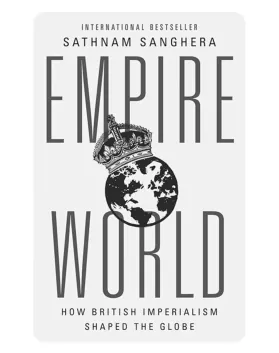
3 Sathnam Sanghera’s Empireworld tells the story of Bartram and Kew as part of a nuanced, complicated account of the British empire’s impact on the world as we know it, and it is a story that is strikingly, remarkably alive to ___ (19). For example, the technologies that facilitated the transporting of the plants and seeds that changed the English landscape and accelerated modern plant science also drove the cultivation of indigo, sugar cane, and rubber, and thereby determined the destinies of countless thousands of enslaved and indentured labourers in British-owned plantations across the world. And these enterprises, leading as they did to the kind of large-scale ecological destruction whose effects are still felt today, also created a need for conservation movements and environmental activism. Neither global communication, nor global cuisines, would be the same without any of this.
4 And it’s not just the world of plants that was affected by Britain’s colonial ambition. Writing in another chapter that investigates the extraordinary global prominence of British charities and non-governmental organisations, Sanghera identifies the same dynamics at work. Take hunting, for example. Its deep entanglement with ideas of English imperial masculinity was directly responsible for driving various animal species to the brink of extinction around the world. But it was equally the catalyst for the various charities that emerged in response, and for the codification of countless environmental protections. “It’s all true, but the opposite is also true”, as Sanghera puts it. History is not a balance sheet: sometimes it requires that we hold multiple truths in our mind simultaneously. Nations – and individuals – can do great evil at the same time as doing good. And that’s where it gets complicated: sometimes doing what’s considered evil can lead to good, and vice versa.
5 The raking light that Sanghera throws across the contradictions at the heart of the story of empire doesn’t come without some trepidation for the author. Empireworld is in some ways a sequel to his previous book, Empireland, where the discussion of imperialism’s role in the making of Britain’s past and present attracted a substantial backlash that included public and personal attacks. Sanghera deals with this backlash at the beginning of his first chapter, and he returns to it a few times subsequently. But his larger response is to spell out the complexity of historical assessment with painstaking clarity, showing, repeatedly, the deep entwinement of the positive and negative contributions of empire.
6 The propagation of British legal and political frameworks is a case in point. In present-day Mauritius, Nigeria, and India, many of the most restrictive and divisive of state mechanisms, aimed at imposing and retaining the power of certain social groups at the cost of others, ___ (22). It is a credit to Empireworld that it does not turn away from that uncomfortable truth.
theguardian.com, 2024
‘a new subscription craze transformed Georgian Britain’ (paragraph 1)
Vraag 17 1 punt
How did this craze change Britain according to the text?
Bekijk het antwoord
Antwoord: D
D
Vraag 18 1 punt
What becomes clear about Bartram and Collinson from paragraph 2?
Bekijk het antwoord
Antwoord: A
A
Vraag 19 1 punt
Which of the following fits the gap in paragraph 3?
Bekijk het antwoord
Antwoord: A
A
Vraag 20 1 punt
Which of the following quotations is an explanation of ‘the same dynamics’ (paragraph 4)?
Bekijk het antwoord
Antwoord: C
C
Vraag 21 1 punt
What is the point made about Sathnam Sanghera in paragraph 5?
Bekijk het antwoord
Antwoord: B
B
Vraag 22 1 punt
Which of the following fits the gap in paragraph 6?
Bekijk het antwoord
Antwoord: C
C
‘Review: Empireworld by Sathnam Sanghera’ (titel)
Vraag 23 1 punt
In welke zin wordt het onderwerp van dit boek voor het eerst gepresenteerd? Citeer de eerste twee woorden van deze zin.
Bekijk het antwoord
Sathnam Sanghera’s (Empireworld tells the story of Bartram and Kew as part of a nuanced, complicated account of the British empire’s impact on the world as we know it, and it is a story that is strikingly, remarkably alive to the contradictions inherent in its telling.) (alinea 3)
Tekst 6 All Things Are Too Small
All Things Are Too Small: Essays in Praise of Excess by Becca Rothfeld, 2024
1 “All things are too small,” begins a poem by the thirteenth-century Dutch Mystic Hadewijch of Brabant. She goes on – “to hold me” – but she did not have to. All things are too small, not just to hold me, but to hold anything. Cups are too small, which is why they demand such relentless refilling. Bodies are too small to encompass more than a sole inhabitant, except in rare cases of mysticism or possession (or the more familiar but perhaps no less astounding case of pregnancy). Books can be big – most of the best ones are – yet even the most encyclopedic affairs are too small to encompass the whole of the world’s wild machinery. Moby-Dick can’t reach its arms around a whale – although Melville aims, as James Woods writes, to touch around every last word. I once saw a man in a restaurant finish his pasta, order the same dish again, eat it, then order and finish it a third time. His was the sanest response to his predicament, but he wouldn’t have had to grasp at such exorbitance if any plate available were big enough.
2 Plates, cups, books, bodies, and all the rest are too small, not contingently, but constitutionally. There is no way around the sense, lodged hard in the throat, that the greatest human longings exceed any possible fulfillment. To want something with sufficient fervor is to want it beyond the possibility of ever getting enough of it. Is it this longing, phenomenologically keen enough to strike some of us as fact, that has led religious thinkers to posit the existence of eternity, the logic being that we seem to need it? Desire is as good a guide to the truth as anything else, but until eternity arrives, we will have to find somewhere to fit our appetites. One way to proceed is to shrink them – first by making concessions to smallness, then by framing contraction as wisdom or virtue. This is the minimalist tack, and these days, it is on the rise. At every turn, we are inundated with exhortations to smallness: short sentences stitched into short books, professional declutterers who tell us to trash our possessions, meditation “practices” that promise to clear the mind of thought and other detritus, and nostalgic campaigns for sexual restraint. These adventures in parsimony each make their own particular mistakes, ___ (26). There is nothing admirable in laboring to love a world as unlike heaven as possible. All things are too small, but some things are less small than others. Even if paucity is inevitable, we can still fight emptiness with fullness. Better to order the third plate of pasta. Better to graze each word once.
Vraag 24 1 punt
Which of the following is claimed in paragraph 1?
Bekijk het antwoord
Antwoord: C
C
Vraag 25 1 punt
Komen de volgende beweringen overeen met wat Becca Rothfeld zegt over ‘the minimalist tack’ (halverwege alinea 2)? Noteer ‘wel’ of ‘niet’ achter elk nummer op het antwoordblad.
- 1 It promotes downsizing to overcome our innate insatiability.
- 2 It is a tried and proven method to help reduce stress.
Bekijk het antwoord
- 1 wel
- 2 niet
Vraag 26 1 punt
Which of the following fits the gap in the text?
Bekijk het antwoord
Antwoord: C
C
‘Better to graze each word once.’ (final sentence)
Vraag 27 1 punt
Which of the following does this phrase in particular object to? It objects to the idea that
Bekijk het antwoord
Antwoord: C
C
Tekst 7 Philip Roth
1 Hannah Gold’s report on the New Jersey Performing Arts Center’s Philip Roth festival [“Your Mind’s in the Hands of Everything,” Letter from Newark, December] deftly captures the thrills, and occasional discomforts, that Roth’s fiction continues to provoke. As president of the Philip Roth Society, I helped to plan the three-day academic conference that directly preceded the festival. That week in Newark was a welcome opportunity to reflect on how much the field of Roth studies has grown in the two decades since the Society’s founding, and to consider new ways to approach Roth’s immense oeuvre.
2 At the festival, Steven Zipperstein and Claudia Roth Pierpont offered a smart take informed by their keen insights into Roth’s person and their deep appreciation of his work, while the panel featuring Ayad Akhtar, Susan Choi, Ottessa Moshfegh, and Gary Shteyngart posited that Roth’s capacity to outrage his readers remains one of the most compelling aspects of his fiction. ___ (30), the handful of sessions that I attended returned consistently to Portnoy’s Complaint, the scandalous 1969 novel that made Roth a literary celebrity (though we academics tend to focus on his later novels, which secured Roth the bulk of his literary prizes). I was reminded of how much of Roth’s public image remains deeply defined by Portnoy.
3 When I taught Roth’s 2008 novel Indignation this past spring, I was struck by how much it resonated with my undergraduate students. One of Roth’s most brutal novels, it centers on a promising college sophomore who, by the whims of historical circumstance, dies in the Korean War. Like much of Roth’s later work, the novel explores how easily our individual lives can be consumed by the contingencies of history. Nothing is assured in Roth’s later works, and it was this ___ (31) that my students responded to. That Roth’s fiction continues to inspire such a robust response not only from young students but from critics and writers of fiction alike is an encouraging sign for those of us invested in his work.
Matthew Shipe
Senior lecturer in English and director of advanced writing,
Washington University in St. Louis
St. Louis, Mo.
Harper’s, februari 2024
‘to consider new ways to approach Roth’s immense oeuvre’ (einde alinea 1)
Vraag 28 1 punt
Worden verderop in de tekst concrete voorbeelden genoemd van nieuwe manieren om het werk van de schrijver Roth te bestuderen? Indien ja, citeer dan de eerste twee woorden van de zin waarin deze voorbeelden staan. Indien nee, antwoord dan “Nee”.
Bekijk het antwoord
Nee
Vraag 29 1 punt
Which of the following is not said about Philip Roth in paragraph 2?
Bekijk het antwoord
Antwoord: B
B
Vraag 30 1 punt
Which of the following fits the gap in paragraph 2?
Bekijk het antwoord
Antwoord: A
A
Vraag 31 1 punt
Which of the following fits the gap in paragraph 3?
Bekijk het antwoord
Antwoord: E
E
Vraag 32 1 punt
What is one of the purposes of this letter?
Bekijk het antwoord
Antwoord: A
A
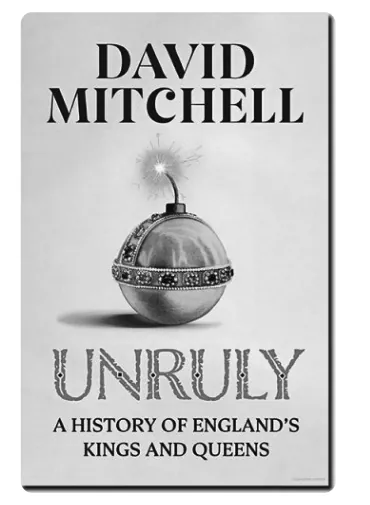
Tekst 8 Unruly
from Unruly, A History of England’s Kings and Queens, by David Mitchell, first published in 2023
1 [In Anglo-Saxon times¹] there were several stable kingdoms broadly covering the area soon to be known as England, one of which was, at any given time, in the ascendancy. The Britons² had been pushed back into the west – parts of what is now Devon and Cornwall and pretty much all of what is now Wales.
2 In fact, the words Wales and Welsh are derived from the words the Germanic-speaking tribes all over Europe gave to the retreating and cowed citizens of the collapsing Roman Empire: walas, which meant foreigners or strangers, from which we get Walloon (the French-speaking Belgians) and Gaul, of Asterix the Gaul (somehow the ‘w’ turned into a ‘g’), as well as the Old English wealh which became Wales and Welsh. (Hence the modern French for Wales is ‘Pays de Galles’, country of the Gauls, which is massively confusing. France, Gaul, is the actual country of the Gauls, you’d think. It’s almost like the French are calling Wales France, as if, to the French, the Welsh seem more French than the French. And, having been to both France and Wales many times, that strikes me as an eccentric opinion.)
3 Meanwhile the Welsh word for Wales, Cymru, derives from a Brittonic word meaning ‘fellow-countrymen’. Strangers or fellow-countrymen. The Welsh for Wales basically means ‘us’ and the English for it means ‘them’.
noot 1 Anglo-Saxon times = periode dat Germaanste stammen voornamelijk afkomstig uit Duisland, het grootste deel van het Britse eiland hadden overgenomen
noot 2 Britons = benaming van de oorspronkelijke bewoners van het Britse eiland
4 Us and them. That sums up the relations between the Britons and the Anglo-Saxons at this point. Sharing a religion only seemed to divide them further and there were persistent differences over how to calculate the date of Easter despite the extreme disinclination of people on both sides to send one another festive eggs. (My strong advice is not to worry about the specifics of this difference because it is complicated and unimportant. Basically, the Celtic church calculated the date of Easter Sunday on an eighty-four-year cycle, while the Roman church that the Anglo-Saxons had largely adopted did it on a nineteen-year cycle. If that information is not enough to put you off further enquiry, then I think you should seriously consider putting this book down and developing a drug habit.)
5 Northern Europe enjoyed ___ (35-1) in the late seventh and eighth centuries that enriched the Anglo-Saxon kingdoms but didn’t much benefit the Britons who had too many Anglo-Saxons between them and all that trade. This further boosted the Anglo-Saxons’ increasing feelings of communality, of a racial and linguistic bond from which Britons were explicitly excluded. The two sides defined themselves against one another and the Anglo-Saxon world was buoyed up by ___ (35-2).
6 This unifying enmity finds its physical embodiment in Offa’s Dyke. […36…]
Vraag 33 2 punten
Komen de volgende beweringen over Wales overeen met de inhoud van alinea’s 1-3? Noteer ‘wel’ of ‘niet’ achter elk nummer op het antwoordblad.
- 1 It did not belong to the Anglo-Saxon realm.
- 2 It started out as a francophone community.
- 3 It waged battles to gain dominance over Britain.
- 4 Its name started as an insult but was reclaimed as a badge of pride.
Bekijk het antwoord
- 1 wel
- 2 niet
- 3 niet
- 4 niet
Vraag 34 1 punt
What is the main function of the aside (the part in between brackets) in paragraph 4?
Bekijk het antwoord
Antwoord: D
D
Er zijn twee woordgroepen weggelaten uit alinea 5 (zie 35-1 en 35-2).
Vraag 35 2 punten
Welke woordgroepen horen op de lege plekken in de tekst? Noteer de letter van de woordgroep achter het nummer op het antwoordblad. Let op, er blijven vijf woordgroepen over.
- a a checkered and violent past
- b a consequent sense of cohesion
- c a fertile home ground
- d a fundamental reappraisal
- e a period of military power
- f a shared royal line
- g a significant economic recovery
Bekijk het antwoord
- 35-1 g (a significant economic recovery)
- 35-2 b (a consequent sense of cohesion)
Het vervolg van alinea 6 van tekst 8 is weggehaald (zie […36…]). Het staat hieronder in drie delen, maar niet in de juiste volgorde:
[a] It would have made stealing livestock tricky, as herding lots of animals back over it would be difficult. Also, it will have been symbolically powerful. Perhaps it was just literally drawing a line, asserting power: Anglo-Saxons hold sway up to here.
[b] People don’t exactly know why. The answer ‘just for fun’ can be ruled out because constructing a ditch that long would take a huge amount of effort and resources today – for a small eighth-century kingdom it would have felt as difficult as acquiring a nuclear deterrent. Was it supposed to be a deterrent, a defensive military line? Maybe, but it wouldn’t be a very good one, unless it was manned and it doesn’t seem likely that it was – it’s too long. Assuming an invading army didn’t require disabled access, it wouldn’t stop them – they could scramble over it.
[c] You may have heard of it. People do walks along it these days. It’s a very long earthwork – a ditch with an embankment – that runs roughly along the Welsh-English border or, at the time of construction, the Mercia-Powys border. It’s been called Offa’s Dyke since time immemorial and, unusually for something like that, it’s probably correctly named and was indeed constructed by order of King Offa of Mercia.
Vraag 36 1 punt
In welke volgorde horen de delen te staan? Noteer de letters van de delen in de juiste volgorde op het antwoordblad.
Bekijk het antwoord
c-b-a
Tekst 9 How the right reads ‘woke’
Steve Rose
1 Like “politically correct” before it, the word “woke” has come to connote the opposite of what it means. Technically, going by the Merriam-Webster dictionary’s definition, woke means “aware of and actively attentive to important facts and issues (especially issues of racial and social justice)”. Today, however, we are more likely to see it being used as a stick with which to beat people who aspire to such values, often wielded by those who don’t recognise how un-woke they are, or are proud of the fact.
2 Actor Laurence Fox nailed his colours to the latter mast this weekend, doubling down on his defence of the privileged white male on last week’s Question Time in a Sunday Times article under the banner “Why I won’t date ‘woke’ women”. Journalist Toby Young piled in, applauding how Fox was “terrorising the Wokerati”, while the Sun last weekend branded Harry and Meghan “the oppressive King and Queen of Woke”.
3 For those who would broadly consider themselves woke, the word has been weaponised against them. But the Fox/Young brigade often claim the same.
4 The origins of woke, in this context – as forged by African American communities – date back at least to the 60s, but its ___ (38) is a recent development. For years the word remained largely unnoticed, but fuelled by black musicians, social media and the #BlackLivesMatter movement, the term entered the Oxford English Dictionary in 2017, by which time it had become as much a fashionable buzzword as a set of values. Some of those who didn’t keep up with the trend felt left behind: if you didn’t know the meaning of woke, you weren’t.
5 Rather than rejecting the concept of wokeness outright, today’s detractors often claim they are rejecting the word as a signifier of pretentiousness and “cultural elitism”. Criticising “woke culture” has become a way of claiming victim status for yourself rather than acknowledging that more deserving others hold that status. It has gone from a virtue signal to a dog whistle. The language has been successfully co-opted – but as long as the underlying injustices remain, new words will emerge to describe them.
guardian.com, 2020
Vraag 37 1 punt
What is the purpose of paragraph 2?
Bekijk het antwoord
Antwoord: C
C
Vraag 38 1 punt
Which of the following fits the gap in paragraph 4?
Bekijk het antwoord
Antwoord: C
C
How the right reads ‘woke’ (titel)
Vraag 39 1 punt
Waar staat ‘woke’ voor volgens de mensen die de term niet bevalt, volgens de tekst? Citeer de volledige omschrijving.
Bekijk het antwoord
(a signifier of) pretentiousness and “cultural elitism”
Tekst 10 The plot thickens…
Pity the legal department at HarperCollins, publisher of Nadine Dorries’s upcoming book The Plot: The Political Assassination of Boris Johnson.
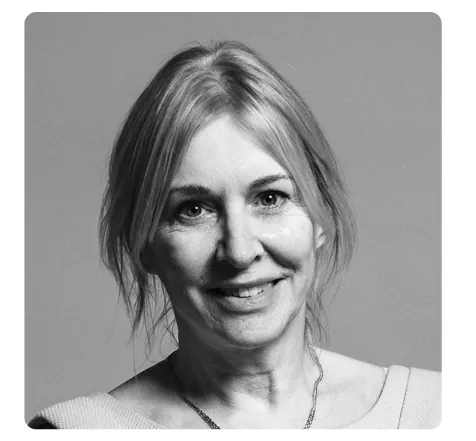
The original publication date of 28 September has now been pushed back to 9 November to allow for “the huge volume of material the author has consulted, the number of high-level sources spoken to, and the required legal process needed to share her story.” Translation: Dorries ___ (40) and we really, really don’t want to be sued.
Still, at least ‘Bad Nad’ has at last found time to quit as an MP – more than 400 days after she last spoke in parliament and more than 80 days since she “resigned with immediate effect” in the expectation of getting a peerage in Johnson’s whiffy honours list. She leaves still not having declared the income from her Daily Mail column or her allegedly impartial TalkTV show, for which she previously said she hadn’t got round to invoicing. She did at least declare the book, on which she claims to have spent 100 hours in April and May this year, in return for an initial advance of £20,500.
On the evidence of her epic resignation note, The Plot’s prose style promises to have the air of something shouted through a letterbox at 2am. It attacked the prime minister’s “gleaming smile in your Prada shoes and Savile Row suit”, warned darkly about “the forces ranged against me” and concluded: “History will not judge you kindly.” To HarperCollins lawyers, we can only say: Best of luck.
Private Eye, 2023
Vraag 40 1 punt
Which of the following fits the gap in the text?
Bekijk het antwoord
Antwoord: A
A
‘To HarperCollins lawyers, we can only say: Best of luck.’ (final sentence)
Vraag 41 1 punt
Welke impliciete voorspelling doet de schrijver hier? Geef antwoord in het Nederlands.
Bekijk het antwoord
Een antwoord met de volgende strekking: Publicatie van het boek zal leiden tot rechtszaken. / Er zullen (veel) rechtszaken komen. / Het zal ze/de advocaten van HarperCollins niet lukken rechtszaken te voorkomen.
Tekst 11 How a megayacht landed in U.S. custody
by Jeff Stein and Stephanie Hays
Over the past 20 years, the use of economic sanctions has exploded. The United States now targets more than 15,000 individuals, businesses and governments, imposing penalties that affect roughly one-third of all nations on Earth. But how do sanctions work? Let’s follow the path of one Russian yacht to its seizure in Mallorca.
The White House acts
A sanctions program starts when the president determines there is a threat to the U.S. economy, foreign policy or national security — in this case, Russia’s 2014 invasion of Ukraine, seizure of Crimea and other activities abroad. White House aides then direct the Treasury Department to start looking for targets connected to that threat. With Russia, potential targets included billionaires accused of benefiting from the regime of Russian President Vladimir Putin. Among those billionaires was Viktor Vekselberg, a Russian magnate with assets all over the world. Soon after the invasion of Crimea, U.S. officials ramped up their investigation into Vekselberg, according to a person familiar with the matter, who spoke on the condition of anonymity to describe the government process. Vekselberg’s assets included Fabergé eggs in London, high-rise apartments in New York City, and the Tango, a $90 million, 255-foot superyacht equipped with a sky lounge, sun deck, “contra-flow pool” and outdoor cinema, among other amenities, according to media reports, yacht brokerage firms and Justice Department documents. Why Vekselberg? Treasury later said it targeted the billionaire “for operating in the energy sector” of the Russian economy. Treasury argued that Vekselberg and other members of the Russian financial elite should not escape “the consequences of their government’s destabilizing activities.” The U.S. has assumed broad authority to issue sanctions for a range of behaviors, trying to cast a wide net around what officials see as rogue regimes. Vekselberg denied wrongdoing in a 2019 interview with the Financial Times and said he had resettled his family in the United States.
[1] Once the decision has been made to impose sanctions, Treasury adds the target’s name to a public government database, known as the list of “Specially Designated Nationals and Blocked Persons.” They did this with Vekselberg in April 2018. Americans are legally prohibited from doing business with anyone on this list. Foreigners also can be charged with a crime or held liable by the United States if they do business with anyone on the list. This is what it means to be “sanctioned” — you get cut off by anyone who needs continued access to the vast global financial systems connected to the United States. The penalty can be applied not just to oligarchs, but foreign officials, banks and even government institutions.
[2] Being on the list can create huge problems, even for a billionaire like Vekselberg. It’s difficult to move money and assets around the world without touching the U.S. financial system. Banks in Europe generally will refuse to open an account for someone on the list. Vekselberg, for instance, probably can’t withdraw or remove funds on deposit with Western banks. (He technically still owns the money, but it is now considered “frozen.”) Art galleries that work with Americans are likely to stop exhibiting his Fabergé eggs, because they won’t want to risk appearing to do business with a sanctioned person, said Adam M. Smith, a senior sanctions official in the Obama administration who is now at the law firm Gibson Dunn. And if he wants something for his megayacht, he will have to figure out how to buy it without violating the sanctions rules. He cannot pay a marina, an insurance company or even a cleaning crew if the money has to move through banks tied to the United States.
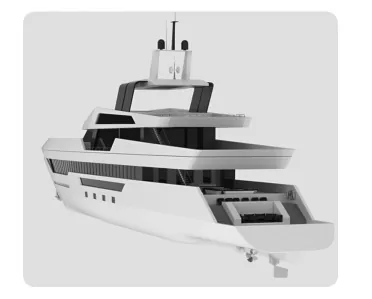
[3] Sanctioned targets sometimes try to evade the law by disguising their identities so trading partners continue to do business with them. Federal prosecutors say Vekselberg’s surrogates tried to hide the fact that they were working for him. One longtime associate in Switzerland was accused of ordering embroidered robes and internet services for an imaginary megayacht named “Fanta” when he was really placing the order for the Tango. (The associate has denied the allegations.)
[4] The U.S. government has been trying to crack down on this kind of sanctions evasion. And it’s hard to hide a 255-foot megayacht. U.S. officials found that Vekselberg’s associates used U.S. banks to pay for maintenance of the Tango, including for a stay at a luxury water-villa resort in the Maldives in December 2020, according to an April 2022 news release.
[5] The discovery allowed the Justice Department to link the yacht to alleged criminal activity and obtain a warrant to seize it. Prosecutors accused Vekselberg’s associates of violating the sanctions by carrying out transactions involving the U.S. dollar. A Vekselberg spokesman did not respond to a request for comment about the charges.
It is not clear that the seizure of the Tango has done much to disrupt Putin’s war aims. But the impoundment — and hundreds of other sanctions imposed since Russia invaded Ukraine in 2014 and 2022 — have made life much more difficult for Russian elites like Vekselberg.
Washington Post, 23 oktober 2024
Let op: lees eerst de opgave voordat je naar de tekst gaat.
Vraag 42 3 punten
Geef voor elk deel van de tekst aan welk van de onderstaande kopjes daar het best past. Noteer de letter van het kopje achter de nummers op het antwoordblad. Let op, er blijven vier kopjes over.
- a Assets are confiscated
- b International relations are strained
- c International search orders are issued
- d Resources can no longer be used
- e Subjects try to join forces
- f The federal authorities keep chasing
- g The police shift their focus
- h The subject is logged on record
- i The subject may use subterfuge
Bekijk het antwoord
- 1 h (The subject is logged on record)
- 2 d (Resources can no longer be used)
- 3 i (The subject may use subterfuge)
- 4 f (The federal authorities keep chasing)
- 5 a (Assets are confiscated)
Bron: College voor Toetsen en Examens, centraal examen vwo Engels 2026, tijdvak 2. Figuren en de exacte opmaak staan in het originele examen.
Andere examens Engels vwo
- 2026, tijdvak 1
- 2025, tijdvak 1
- 2025, tijdvak 2
- 2024, tijdvak 1
- 2024, tijdvak 2
- 2023, tijdvak 1
- 2023, tijdvak 2
- 2022, tijdvak 1
- 2022, tijdvak 2
- 2022, tijdvak 3
- 2021, tijdvak 1
- 2021, tijdvak 2
- 2021, tijdvak 3
- 2019, tijdvak 1
- 2019, tijdvak 2
- 2018, tijdvak 1
- 2018, tijdvak 2
Hoe ToetsChecker Engels per vraagtype nakijkt, lees je op Engels toetsen nakijken met AI.
Veelgestelde vragen
Hoeveel vragen heeft het eindexamen Engels vwo 2026, tijdvak 2?
Het centraal examen Engels vwo 2026, tijdvak 2 telt 42 vragen. Alle vragen vallen onder reading comprehension.
Wat zijn de antwoorden van het examen Engels vwo 2026, tijdvak 2?
Op deze pagina staat bij elke vraag het antwoord uit het officiële correctievoorschrift van het College voor Toetsen en Examens, met de punten per onderdeel. Bij meerkeuzevragen staat de juiste letter erbij.
Waar vind ik het correctievoorschrift van Engels vwo 2026, tijdvak 2?
Het correctievoorschrift staat op examenblad.nl, de site van het College voor Toetsen en Examens (https://www.examenblad.nl/2026/vwo/documenten/cse-2/vw-1002-a-26-2-c).
Hoe oefen ik met het examen Engels vwo 2026, tijdvak 2 en krijg ik feedback?
Vraag je docent om het examen als oefentoets klaar te zetten in ToetsChecker. Je maakt het op papier of online, en het AI-model kijkt het na volgens het correctievoorschrift, met feedback per vraag. Je docent geeft het resultaat daarna vrij.